Why international trade did not save Russia in the 1990s and will not do so today either
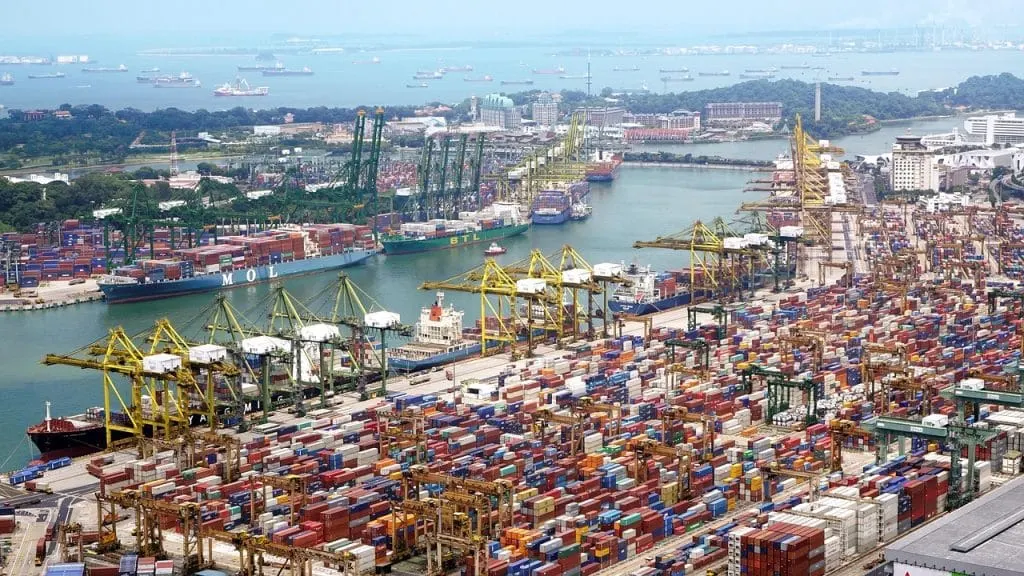
Russia’s Economic Challenges in the 1990s
Russia experienced a tumultuous period in the 1990s, marked by the transition from a command economy to a market economy. This process generated a series of challenges and crises that undermined the country’s economic foundations. From 1991 onward, Boris Yeltsin’s reform policy, led by Finance Minister Yegor Gaidar, aimed to liberalize the economy through a series of radical measures. However, the implementation of these reforms quickly revealed its limitations. Structural adjustment shocks led to a precipitous 55% drop in GDP between 1989 and 1998.
This transition was hampered by several factors. First, dependence on raw materials stifled the development of other economic sectors. The resource-rich Russian economy relies heavily on oil and gas exports. This situation created vulnerability to fluctuations in global energy prices. Furthermore, the privatizations carried out in the 1990s were often poorly managed, leading to the emergence of an oligarchy that concentrated wealth and power in the hands of a few individuals.
At the same time, economic sanctions imposed by the West exacerbated the consequences of these reforms. The idea that international trade could lead Russia toward a democratic and economic transition proved illusory. Instead, foreign companies, frightened by political and economic instability, withdrew, depriving Russia of the investments necessary for its development. Global Integration and Trade Policy
In the context of global integration, Russia has attempted to align itself with international trade norms and practices. The creation of free trade zones and partnerships with various nations has been considered. However, the results have been mixed. For example, agreements with the European Union have not had the expected impact on trade. The removal of trade barriers has not been sufficient to compensate for the structural weaknesses of the Russian economy.
Russia’s trade policy, centered on the export of raw materials, has also had devastating consequences. This strategy has kept the country in a subordinate position in the global trade hierarchy. Russian companies struggle to diversify, preferring to rely on traditional sectors rather than innovate. Moreover, a recent report emphasizes that even in 2025, Russia remains heavily dependent on the export of its natural resources. This economic model has led to uneven growth and increased inequality. The majority of the population suffered from poverty while a small elite benefited from the reforms. Russia’s difficult economic situation in the 1990s thus laid the groundwork for distrust of Western institutions and contributed to the rise of strong economic nationalism. This nationalism, fostered by Vladimir Putin, allowed the state to strengthen its control over resources by presenting itself as the defender of national sovereignty.
The consequences of contemporary economic sanctions
The economic sanctions imposed on Russia since the start of the conflict with Ukraine in 2022 have brought back memories of the challenges of the 1990s. These sanctions target numerous sectors, including energy, finance, and technology. Western companies have withdrawn from the Russian market, leading to a supply crisis and a significant loss of expertise. Unlike the economic transition of the 1990s, this time Russia faces unprecedented international isolation.
**The effects of this isolation have been felt across several sectors. The lack of modern technologies has severely impacted industry. For example, critical companies such as those in the aerospace and defense sectors are now forced to rely on outdated technologies. The sanctions have also led to runaway inflation and a decline in purchasing power, exacerbating the difficulties faced by the already precarious middle class.**Despite the Russian government’s efforts to promote resource dependency, the lack of access to international financial markets has further intensified economic hardship. Investment projects remain limited, and foreign investor confidence is virtually nonexistent. Companies seeking to establish business partnerships must now navigate a complex environment where risk is omnipresent. Indeed, the scale of the sanctions prevents Russia from reversing this trend.
Resource nationalization strategy
The illusions of economic engagement The return of business between Russia and the West raises many questions. In recent years, business leaders such as Steve Witkoff and Jared Kushner have attempted to re-establish trade dialogue with Russian representatives like Kirill Dmitriev. This desire to revive trade similar to that of the 1990s appears to be a form of « magical thinking, » an illusion that economic engagement could transform Russia.
However, the reality is that Putin’s policies are not driven by market forces. Economic decisions are inextricably linked to the Kremlin’s political strategy, where the state exercises direct control over the economy. This characteristic makes expectations of a massive return of foreign investment illusory. Even when opportunities arise, the investment climate remains hesitant in the face of a government that prioritizes its strategic interests over any commercial considerations.
https://www.youtube.com/watch?v=5gM1gnMkUKU Lessons from the Past for the Future of International Trade in Russia Looking ahead, it is crucial to learn from Russia’s economic transition in the 1990s. The country faces formidable challenges that require profound structural reforms if genuine economic change is to occur. Integration into the
International trade will not be feasible as long as political and economic conditions remain unstable.
Experts agree that to regain international trust, Russia must review its trade and economic policies. This includes a sincere dialogue regarding market transparency, as well as the establishment of a robust legal framework to attract investors. Initiatives to rethink trade relations must go hand in hand with internal reforms that create a better business climate.
Read next
 Business
International companies trading with ICE under fire
International Companies and Their Relationships with ICE The contemporary economic landscape is shaped by numerous inter
 Business
Russia’s wartime consumer boom is faltering as shoppers tighten their budgets
The Impact of Inflation on Consumption in Russia Inflation in Russia, currently at 9%, is having a significant impact on
 Business
Putin’s business partners do not want Western companies to return to Russia
In the current geopolitical climate, the return of Western companies to Russia arouses divergent passions and reactions.
 Business
Protecting American businesses to better save them, according to Carl Benedikt Frey
In an economic world where competition is intensifying and geopolitical issues are taking on unprecedented proportions,