US economic activity slows further, without significant price spikes

Contents8
The United States has been experiencing significant economic fluctuations for several years. While the country has long been the driving force of the global economy, worrying signs of a slowdown are emerging. This development raises many questions: has the US economy entered a new phase of recession? What would be the impacts on the labor market, consumption, and businesses? Recent analyses by the Federal Reserve Bank and various economists show that although economic activity is slowing, this has not yet been accompanied by a surge in prices, a phenomenon that could, however, occur if economic conditions worsen.
Economic Context: Sluggish Growth
The report published by the Federal Reserve Bank clearly indicates a slowdown. In the space of a few months, economic growth has fallen significantly, from an increase of 3.0% to approximately 1.5% over a one-year period. This decline, leading to a reduction in business investment and an increase in inventories, raises questions about the medium- and long-term outlook for the US economy. Discover the causes and consequences of an economic slowdown, its impact on the economy, businesses, and employment, as well as tips for preparing for and coping effectively.

The triggers of the slowdown
Several factors are contributing to this economic slowdown:
Monetary policy:
- The Federal Reserve Bank has doubled its efforts to curb inflation by raising interest rates. This measure, while justified, could also reduce borrowing and, consequently, consumption. Declining consumer confidence:
- With the slowdown in activity, companies like General Motors and Boeing are feeling a decline in orders. This only amplifies the pessimism of consumers, who are now hesitant to spend. Terrifying stagflation:
- After an initial post-COVID boost, the economy now faces possible stagflation if the unemployment rate rises while goods prices continue to rise. Examining these aspects, we can better understand why forecasts of stagnant growth are emerging. Investment deferrals and tepid inflation are on the horizon, according to experts at Goldman Sachs. Moreover, geopolitical tensions are exacerbating many existing economic challenges. Impact on the Labor Market and Businesses
An economic slowdown often results in an increase in the unemployment rate. At this point, although the U.S. labor market has shown remarkable resilience, signs of easing are emerging. JP Morgan Chase reports that many small businesses are reducing their hiring plans in the face of uncertainty about rising rates and costs.
Discover the causes and consequences of the economic slowdown, as well as tips for anticipating and overcoming periods of financial stagnation, both individually and within businesses.
Recruitment and Jobs: The Challenges Ahead

Workforce optimization:
Companies like Caterpillar and ExxonMobil are exploring ways to streamline operations. This often involves job cuts or workforce reassessments.
- Changing strategies: Companies are adjusting their organizational structures to remain competitive, including reducing expenses and allocating resources more discretionarily.
- Flexibility: The need to adapt to a constantly changing economic environment is becoming paramount. This includes exploring new domestic and international markets.
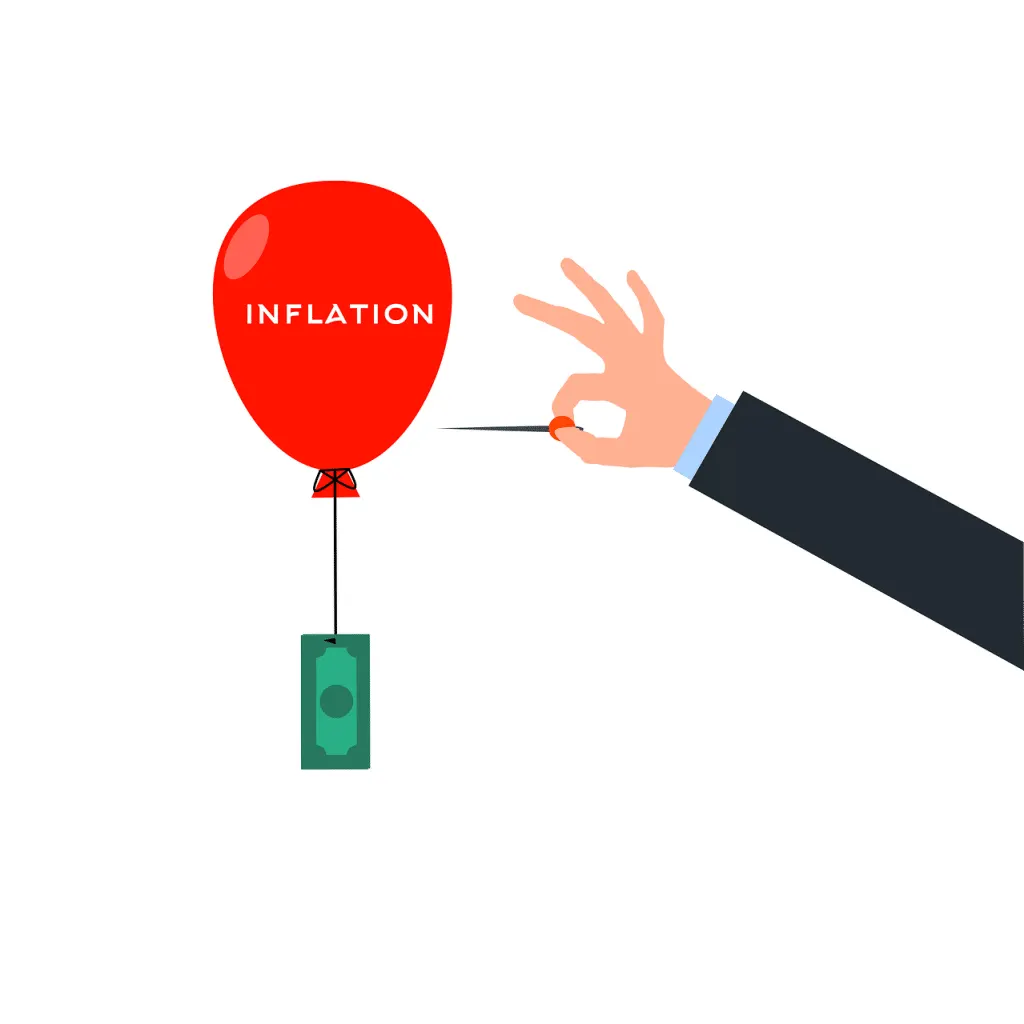
- The case of McDonald’s illustrates how companies can navigate such a climate. By revising its menu and incorporating lower-priced options, the restaurant chain strives to reassure consumers while maintaining its profit margins. Labor market challenges, if managed well, can thus be transformed into opportunities for innovation. Inflation and Prices: A Bubble Under Control? One of the notable paradoxes of the current slowdown is inflation management. Even with a decline in activity, the prices of goods and services have not skyrocketed. This is worth exploring. Price dynamics are based on several pillars, including demand and supply.
Discover the causes and consequences of the economic slowdown, its effects on businesses, employment, and financial markets, as well as strategies for adapting in times of uncertainty.
Factors Influencing Inflation
The observable moderation of prices is explained by:

The pricing policy, although omnipresent, has helped maintain a certain price stability despite rising costs.
Efficient supply chain management:
- While many companies adapt their operations to cope with shocks, better inventory and resource management has helped minimize price increases. Rapid business responses:
- Firms such as Boeing and Procter & Gamble have successfully adjusted their production according to market dynamics, allowing them to maintain their prices at an acceptable level. According to some analysts, the consequences of this controlled inflation may represent an opportunity. If consumption returns to a normal pace, we could see a normalization of prices that would greatly benefit businesses and consumers. In this context, cost optimization remains a crucial issue for economic actors.
- Future prospects and affordable housing As the economic landscape evolves, questions about the future outlook are becoming increasingly pressing. Fears of a recession are emerging, but also those of a timid recovery. The still-simmering trade war and geopolitical developments make forecasting particularly complex.
Multiple Issues to Consider
To better understand what the future holds, several facts are available:
A recent study revealed that consumers tend to turn to more economically viable brands, such as McDonald’s, for low-cost meals.
Investments in Innovation:
- Companies are more encouraged than ever to invest in technological solutions and product improvements to remain competitive. The Real Estate Sector Facing Uncertainty:
- Forecasts show that the real estate market could suffer from the slowdown, with mortgage interest rates soaring. Major economic players, such as ExxonMobil and Caterpillar, must navigate this with caution. Risk management and strategic alignment are crucial not only to cope with the current reality, but also to plan for an era of potential turnarounds. Ultimately, the economic resilience of the United States will be tested, and the responses of companies will determine the extent of the impacts on the overall economy.
Read next
 Business
US economic activity improves in May, while inflation is poised for a sharp acceleration
Recently, the US economy showed signs of recovery in May, with promising economic activity figures. However, this improv
 Business
U.S. Economic Activity Sluggish as Consumer Inflation Expectations Soar
The United States is experiencing a remarkable economic slowdown, with signs of falling demand, reduced production and f
 Business
A family business in Northwest Iowa celebrates a significant milestone
A Significant Milestone for VT Industries in Northwest Iowa VT Industries, a successful family-owned business located in
 Business
A politician is considering further tightening the conditions for opening businesses, but an ally is raising doubts in her.
The climate of economic uncertainty and political debate often take on unexpected dimensions. Recently, a prominent poli