Penny shortage: a major legal and commercial headache across the United States

Contents4
Penny Shortage: Current Situation in the United States
The issue of the penny shortage has become significant in recent years in the United States. Despite millions of coins in circulation, the difficulties faced by the U.S. Treasury in terms of production and distribution are making them increasingly scarce. The reasons for this situation are numerous and involve economic, logistical, and even cultural factors. The production of pennies has always been a point of contention due to its high production costs, sometimes exceeding the face value of the coins themselves. In 2025, the production of these small coins is the subject of intense debate regarding their usefulness. The costs have become so prohibitive that they are giving consumers and legislators pause for thought. According to one study, it now costs approximately 1.8 cents to mint a penny, placing this currency in a paradoxical situation. While no immediate action may seem urgent, the question of the economic impact of their potential disappearance cannot be ignored.
**In a society where digitalization is accelerating, the use of pennies has become increasingly marginal. They are frequently underutilized in everyday transactions, leaving most consumers perplexed about their true necessity. Even though they represent a tiny fraction of the money supply, their absence could generate unexpected ripple effects.**Discover the causes and impacts of the penny shortage, as well as the solutions being considered to address it.
The Economic Impact of the Penny Shortage To better understand the consequences of this shortage, it is relevant to analyze the resulting commercial issues. The one-cent coin, although seemingly insignificant, plays a role in price numbers, currency rounding, and even in charitable giving through donations. Price rounding: **Many prices displayed in supermarkets end up being rounded up or down to the nearest whole number, which could lead consumers to pay more than 25 cents for a box of cereal, rather than 24.99 cents.**Impact on charities:

Inflation:
If the one-cent coin were to disappear, it could exacerbate the effects of inflation since consumers would often face higher prices.
- These are all questions that raise concerns about the future of pennies in an economy where price adjustments are crucial. Looking at countries like Canada, which has already phased out pennies, we can see that the transition was accompanied by changes in the local business landscape, allowing for alternative rounding methods.
- https://www.youtube.com/watch?v=LcWYJ03JavE
- Regulation and Legal Framework Surrounding Coin Production Coin production in the United States is heavily regulated. The role of the U.S. Mint is crucial, as it is responsible for producing all circulating coins. However, regulations governing production face ongoing challenges. The central question is whether the production of pennies is truly necessary.
To do this, Congress often has to grapple with this sensitive issue. Indeed, any change in legislation or regulations concerning coin production would directly impact the U.S. Treasury and, consequently, the global economy. The proposal to eliminate pennies has sparked intense debate and could force lawmakers to consider new approaches to modernizing the monetary system. Anti-inflation measures: Current regulations do not adequately address the impact of the absence of coins on vulnerable market segments.
Building consensus on any major decision will be essential, which is often difficult in today’s political landscape.
Implications for the banking sector: Banks and financial institutions could also feel the effects of these changes, including the potential costs to businesses. In an increasingly globalized system, the lack of adequate legislation could make any decision regarding the production of pennies not only a legal headache but also a growing economic challenge for the United States. Discover the causes and consequences of the one-cent coin shortage, as well as the proposed solutions. Public and Business Reactions to the Shortage Faced with this one-cent coin shortage, the American public displays a range of opinions, from indifference to deep concern. For many Americans, this situation is seen as a minor inconvenience that can be circumvented through electronic transactions. For others, it represents a distortion of the traditional values associated with the use of money.
Businesses, for their part, are adopting various measures to navigate this new reality. Small businesses, for example, have begun encouraging electronic payments to reduce reliance on pennies. This is especially true in sectors where quick transactions are the norm.
- Adoption of alternatives: Some companies have introduced digital payment terminals that automatically round prices to accommodate the shortage of pennies. Staff training: Employees are being trained to explain the situation to customers to minimize frustration.
- Community partnerships: Businesses are collaborating with charities to ensure that, even without coins, donations continue to flow. As such, businesses need to be proactive and develop innovative approaches to address the shortage. This could involve collaborating with government organizations to consider sustainable solutions. https://www.youtube.com/watch?v=Nkhfd-VVgfo Global Consequences of the Penny Shortage
- The situation with pennies in the United States could have repercussions beyond American borders. Many countries are closely monitoring how this issue develops, as it could provide clues about the viability of their own monetary systems. Canada, which has eliminated low-value coins for several years, offers an interesting case study.
This phenomenon is part of a broader trend in which many nations are reconsidering their monetary circulation. The transition to digital currencies is therefore a solution being considered by several governments. This is leading European authorities to question their own coin production practices and the economic impact of such a decision. **Lessons Learned from Canada:**Canada saw a reduction in operating costs and an optimization of its monetary system after eliminating small coins.
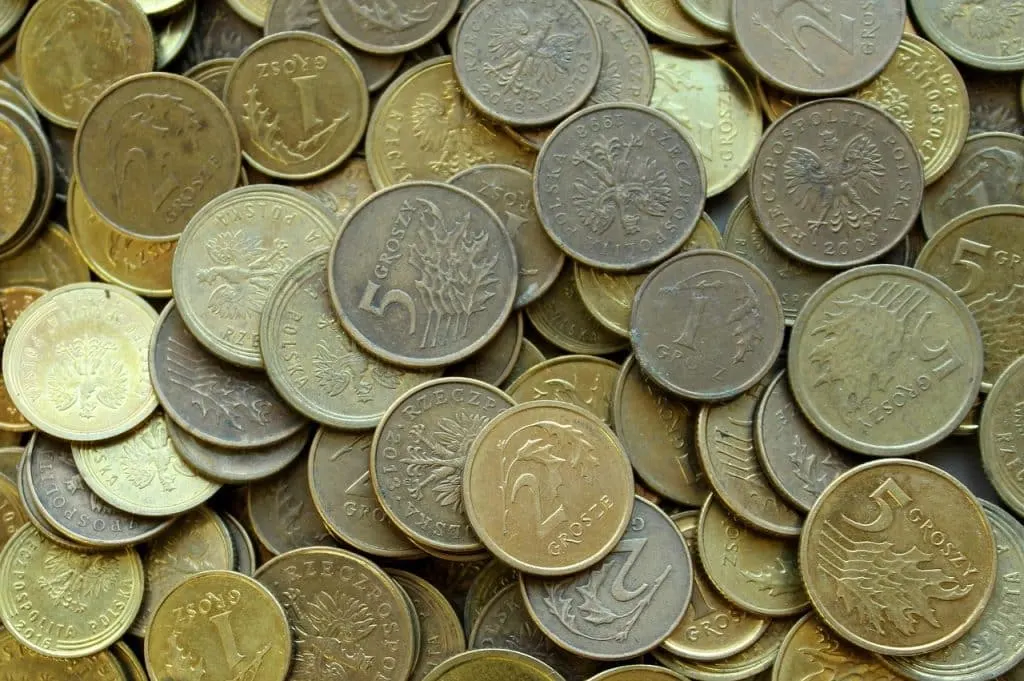
Digital shopping has increased significantly, prompting many countries to consider reforms.
Reallocation of spending: **Relocating planned spending from coin production to the development of other sectors could have positive long-term effects.**State
Impact of shortages Solutions consideredUnited States
-
Increased transaction costs, price rounding Adoption of digital currencies CanadaEconomy with reduced manufacturing costs
-
Experimentation with digital alternatives Europe
-
Consideration of eliminating pennies Modernization of the monetary system
Read next
Take control of your income: The solopreneur business model is thriving across the United States, from Florida to California
Times are changing, and with them, business models. Across the United States, a new phenomenon is emerging and taking th
 Business
The 20 best university cities in the United States, ranked and revealed
Introduction to University Cities in the United States University cities in the United States play a vital role in the a
 Business
« This place will triumph »: Business leaders predict West Palm Beach will become the next big booming city in the United States
West Palm Beach: A City Undergoing Economic Transformation Once considered a mere retirement destination, West Palm Beac
 Business
The United States is investing in a chip startup led by the ousted former CEO of Intel.
The United States Takes a Strategic Position in the Semiconductor Industry The United States recently committed to inves