America’s largest employers face the challenge of downsizing
Contents6
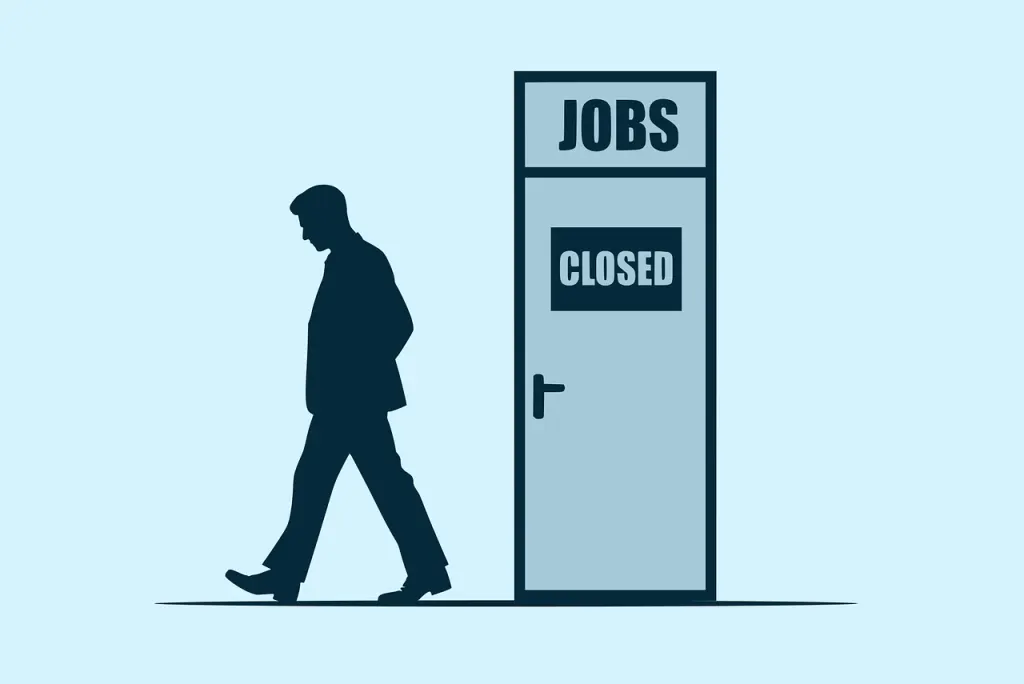
Large American employers are currently navigating troubled waters, forced between the need for efficiency and the social impact of layoffs. While technology, particularly artificial intelligence, promises unprecedented efficiency gains, the consequences for employment are alarming. In 2025, iconic companies such as Amazon, Google, and Microsoft are announcing unprecedented workforce reductions. This dynamic leads us to question the future of work, the challenges ahead, and the upcoming transformations in the professional landscape.
Predictions of workforce reductions among tech giants
As tech giants continue to innovate, they also face increasing demands to streamline their operations. Andy Jassy, CEO ofAmazon, has made it clear that workforce reductions are inevitable due to the « efficiency gains » expected from artificial intelligence. This statement, while more direct than others, reflects a broader trend in the industry, where the responsibilities of a massive workforce are being called into question.
Companies like JPMorgan and Ford have also expressed similar concerns, anticipating cuts of 10% to 50% in some divisions. For example, JPMorgan’s Consumer and Community business plans to integrate AI to reduce the need for labor. At the same time, the realities of the remote work market are amplifying uncertainty, with many remote positions being the first to be targeted by these waves of layoffs. Impact on employee morale
These announcements have a significant impact on employee morale. They are not only feeling the anxiety of job uncertainty, but also a fracture in corporate culture. Employees particularly affected by these cuts are those who had demonstrated commitment and innovation during the pandemic. While major companies like Meta and Microsoft sought to retain talent, the current trend is instead to reduce staff to focus on automation.
It is essential to examine the motivation of these giants to opt for headcount reductions. Here are some reasons for this shift: Cost optimization: Companies are realizing that huge office teams can become economic liabilities. Increased efficiency: The integration of AI makes it possible to replace certain manual tasks with efficiently precise automation.
Changes in market dynamics:
- Global fluctuations require agility and adaptability that seem easier to achieve with smaller teams. Discover the latest information, news, and advice on layoffs: causes, market trends, employee rights, and tips for bouncing back after a departure. That said, employees should expect to navigate a radically different corporate culture. Precious resources and time spent hiring and retaining large teams could become a luxury that few companies will be able to afford in the future.
- A historic employment disruption: a return to reality for small businesses As a result of these changes, we are seeing a return to a time when the majority of jobs were provided by small businesses. At the beginning of the 20th century, before industrialization, the vast majority of Americans worked for themselves or in small, artisanal businesses. This model could make an unexpected comeback as large companies attempt to integrate AI into their structures.
- Small businesses, historically more vulnerable to economic crises, could benefit from a new boost. While some college graduates feared being pushed out of the job market, opportunities could arise in agile and innovative startups, rising to the challenge posed by employment giants. The Advantages of Small Businesses in a Changing Market
Flexibility:
Small businesses can adjust more quickly to changes in demand and new technologies.
Innovation:
Startups often provide a creative and innovative environment that can result in a better product or service. More Human Corporate Cultures:
Integration into a small organization often creates a sense of community and engagement among employees.
Indeed, studies show that employee engagement is generally higher in companies with fewer than 500 employees. Employees often feel more valued and inspired when they are an integral part of decision-making. This contrasts sharply with the anonymity one can feel in giant corporations like IBM or Disney.
- Advantages of Small Businesses Explanations
- Flexibility Rapid adaptation to market trends
- Behind the scenes of innovation Creativity that fosters new product development
More Human Corporate Cultures Increased Sense of Community and Belonging Future Outlook: Prioritizing Automation and AI **By 2025, the need for automation in key sectors such as retail, finance, and technology will reach unprecedented levels. Companies like McDonald’s are already considering the integration of automated tools to reduce billing and management, making their workforce less essential.**Forecasts suggest that Microsoft, which has adjusted its hiring forecasts, is considering the possibility of eliminating up to 80,000 jobs in the near future, shifting responsibilities to AI. This raises important questions about the impact of AI on work.
Societal and Economic Impact of Ongoing Layoffs
The question of how layoffs affect society is equally crucial. When giants like Ford and
Apple **massively reduce their workforce, the effect is felt not only in boardrooms, but also throughout the local and national economy. Fewer employees means less consumption, which can lead to a broader economic contraction and affect sectors such as healthcare, housing, and small businesses.**The economic consequences of layoffs can be profound, leading to a vicious cycle where companies pay less tax, which affects essential public services. Communities are often the first to face these challenges. According to a Gallup study, employees laid off from large companies are more likely to experience financial hardship, thus undermining a wide range of social benefits.
Necessary Policy and Social Responses
- To mitigate these effects, change is imperative. Governments must explore new regulatory and support mechanisms to support this migration to more flexible work ecosystems. Here are some solutions being considered: Anti-layoff policies:
- Protect workers by establishing laws against unfair dismissal. Training support:
- Provide training mechanisms for laid-off workers so they can access new careers. Overall impact assessment:
Discover the latest news, the causes, and impacts of corporate layoffs, as well as tips for coping with job loss or better managing these career changes.
This situation represents a decisive turning point in the world of work, where companies must effectively navigate innovation, profitability, and social responsibility. Do we really know what the future holds for American employment, or are we simply witnessing the rewriting of the labor market rules?
Read next
 Business
One of America’s largest conglomerates is in complete decline.
The economic revolution is well and truly underway. As the era of American industrial giants appears to be coming to an
 Business
America’s Big Companies Face a Trillion-Dollar Investment Dilemma
The Economic Context of US Corporate Investment Large American corporations are currently facing a real investment dilem
 Business
Federal judge rules against largest supermarket merger ever
 Business
Ready to take on a savings challenge this year?
The 52-Week Challenge: A Classic for Saving The 52-Week Challenge is a popular challenge that attracts many participants