When the world of business and democracy clash

The Challenges of the Business World: Understanding the Dynamics
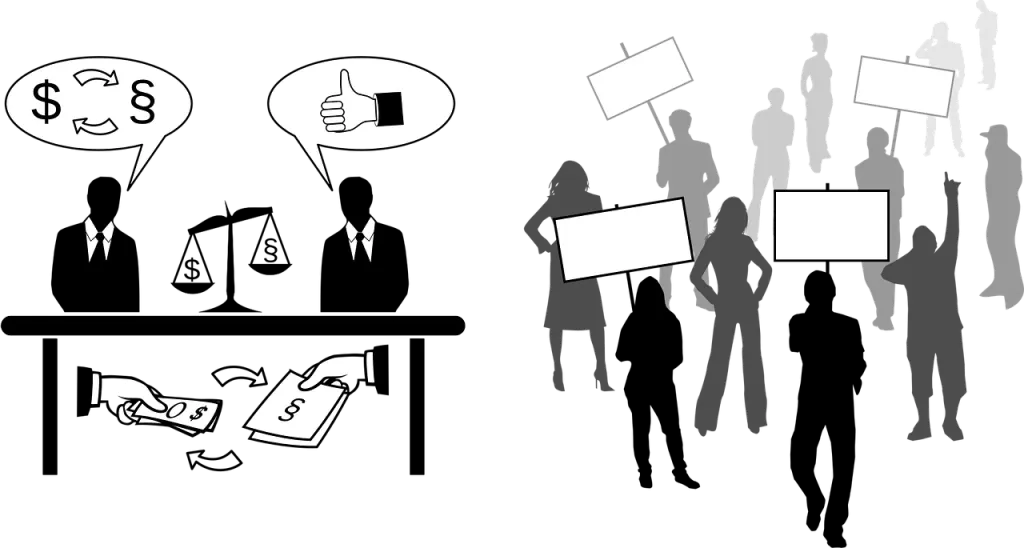
In a constantly evolving world, the dynamics of the business world are becoming increasingly complex. By 2025, the pursuit of profitability and innovation often clashes with the fundamental values of democracy. This conflict generates major tensions that deserve to be explored. The search for quick profits leads some companies to ignore the social and environmental impacts of their actions. This is evidenced by the rise of the circular economy, which seeks to reconcile business and sustainability, but often at the expense of the common good. Thus, the question arises: how can companies remain profitable while respecting democratic principles? Economic actors are subject to increasing pressures, whether from consumers, governments, or even international organizations. To navigate this complexity, they must commit to adopting ethical practices that reflect social responsibility. Global competition further exacerbates these challenges. Companies are increasingly relocating their operations to reduce costs, leading to a deterioration of working conditions in some countries. Consequently, it is becoming imperative to rethink corporate governance and incorporate practices that promote transparency and ethics. The interplay between these different forces shapes the future of businesses and influences society as a whole. **Furthermore, the rise of digital technologies also presents unprecedented challenges. Technology companies, through their control over information, can influence political choices and social behaviors. This phenomenon raises crucial questions about the power granted to these companies and their role in safeguarding democracy.**A concrete example is the impact of social media on public opinion, which can have significant ramifications during elections. Discover the tensions and interactions between the business world and democracy, exploring how these two forces influence society and governance.
The Role of Business in Modern Society Businesses are no longer simply entities producing goods and services. They play a central role in modern society, influencing not only the economy but also political and social life. Consequently, their commitment to the common good is now essential. Companies such as Patagonia and Ben & Jerry’s illustrate how a strong social conscience can translate into commercial success. They have integrated ethical values into their business models, demonstrating that profitability and responsibility can coexist. To strike a balance, businesses must implement policies that promote responsible governance. This includes practices such as implementing transparency dashboards, where financial and social performance are measured and reported regularly. Such an approach strengthens the company’s credibility while establishing a relationship of trust with society.Companies must also guard against malicious intent and abuses of power carried out in the name of profit. For example, the concept of the « mission-driven company » is emerging as an innovative model, where companies integrate social and environmental objectives into their purpose. This establishes a new framework for corporate governance, one that is not merely a reflection of economic growth. In this respect, the evolution of laws concerning corporate social responsibility is a key factor that could transform the relationship between business and democracy.
https://www.youtube.com/watch?v=dAI72YWn3m0 Economic Powers and Threats to DemocracyInteractions between businesses and political institutions can generate alarming tensions. Large corporations have disproportionate power over political decisions, which raises serious concerns about democratic accountability. In this instance, recent cases have highlighted how some companies can manipulate democratic processes by using their economic power to influence legislation in their favor.
At the heart of this conflict lies the issue of transparency.
The lack of clarity regarding the relationship between the private and public sectors opens the door to corruption. For example, the case of large corporate lobbyists pressuring politicians to obtain legislative advantages has become commonplace. This raises questions about the existing mechanisms for controlling such practices and the effectiveness of regulatory bodies.
The report published by the International Trade Union testifies to these dangers. Labor institutions warn that the rise of private interests could undermine the foundations of democracy. To counter this trend, initiatives are emerging to regulate lobbying practices and guarantee genuine public governance. This includes calls for stricter laws on the transparency of political financing. In this context, how can citizens act to restore balance? Purchasing power becomes a weapon to drive change. By choosing companies that respect ethical standards, consumers become actors in the democratic process, thus strengthening the impact of corporations while demanding greater accountability. **Explore the conflict between the business world and democracy, analyzing the tensions, challenges, and impacts on contemporary society.**Analyze the consequences of economic inequality. Economic inequality, exacerbated by certain corporate practices, poses a major challenge to democracy. The concentration of wealth in the hands of a small group of people leads to an imbalance of power. The results of a survey conducted by researchers from G20 countries highlight the fact that a significant portion of the population believes that billionaires pose a threat to democracy.
This perception is based on concrete observations where the wealthiest individuals exert unprecedented influence on political decisions. By 2025, the effects of speculative finance and rampant lobbying have allowed some to circumvent governance rules. Citizens then find themselves in a position where their voices are silenced by private interests. To illustrate this phenomenon, it is relevant to examine recent social movements that have emerged, calling for a redistribution of wealth. These movements attempt to raise awareness and advocate for a more inclusive economic model where responsibility **Corporate social responsibility would be at the heart of the discussions. These campaigns emphasize that transparency, ethics, and dialogue between civil society and the private sector are essential for a healthy democracy.**Businesses must therefore realize that by neglecting their social impact, they not only damage their image but also endanger the very fabric of society. This is why collaborative initiatives between businesses, governments, and citizens are essential to establishing a balance of power that respects and strengthens democracy.
https://www.youtube.com/watch?v=Qa-4aWzJztM
When Justice Threatens Democracy Another worrying aspect of the relationship between business and democracy concerns the role of justice in these interactions. Judicial systems can sometimes become instruments serving private interests, thus undermining citizens’ trust in institutions. When political figures known for their questionable practices turn against the justice system, it creates a climate of mistrust that undermines democracy. Recent events show that some legal actions, far from protecting the public interest, appear to favor groups in power. For example, after the legal troubles of political figures, accusations of judicial harassment have emerged, fueling a sense of injustice among citizens. These scenarios raise fundamental questions about the responsibility of judicial institutions in maintaining democracy.
The fight to restore trust in the justice system requires reforms that guarantee greater independence for the judiciary. At the same time, civil society must also play a crucial role in raising awareness, denouncing abuses and promoting initiatives that emphasize integrity and transparency. in the judicial system.
It is essential to remember that democracy is not simply a voting system, but a set of values that underpin trust between citizens and their institutions. Implementing structural reforms can help restore this trust and secure future interactions between the business world and democracy. Explore the conflict between commercial interests and democratic principles, and how this tension influences our modern societies. Towards a New Governance Faced with these unprecedented challenges, the need to adapt governance models is more pressing than ever. Companies must align themselves with values that transcend mere profit. Establishing appropriate regulatory mechanisms and clear ethical standards is essential to restoring meaning to economic activity. Many companies are beginning to adopt more inclusive operating models, inviting stakeholders to co-create solutions that address societal challenges. This implies a shift in traditional areas of action, centered around corporate social responsibility and civic engagement. This transformation could be gradual, but some examples are already showing positive results.
Governance mechanisms must therefore redefine their approach by integrating commitments to sustainability and ethics. Institutions also have a key role to play in encouraging best practices. In this regard, organizations such as the OECD and the UN offer valuable guidelines on how to strengthen corporate transparency. **Finally, it is becoming imperative to create spaces for dialogue between businesses, governments, and citizens in order to lay the foundations for a democracy.**consistent and ethical. The path to a true era of collaboration is laid out, but it is essential that each actor takes responsibility for contributing to this transformation.
Read next
 Business
Asian markets plunge amid renewed US-China trade clash, despite Chinese exports beating forecasts – live business tracking
US-China Trade Tensions: Analysis of Recent Asian Market Drops Recent developments in the US-China trade war have had dr
 Business
The Norfolk Pagoda, a hidden gem: when local entrepreneurs recount their business nightmare
The Norfolk Pagoda: A Cult Gem in the Heart of the City The Norfolk Pagoda is often seen as a symbol of architectural be
 Business
Behind the Scenes of the Business World: Innovation and Strategy
Essential Business Trends In a constantly evolving business world, staying on top of trends is crucial for maintaining c
 Business
How Anthropic revolutionized AI programming and shook up the business world
The AI Programming Revolution with Anthropic AI programming is undergoing a major transformation thanks to the emergen