Minneapolis businesses are planning to close on Friday to protest against ICE

Contents6
Minneapolis Businesses Face ICE Repression
In Minneapolis, community organizations, workers, and business owners are uniting to denounce the actions of Immigration and Customs Enforcement (ICE). For businesses, especially those primarily serving the immigrant community, the fear of checks and arrests by this federal agency has major repercussions on their operations. Many local restaurants and shops have displayed signs of protest against ICE, affirming their solidarity with the immigrant community and their refusal to allow the agency entry without a valid warrant.
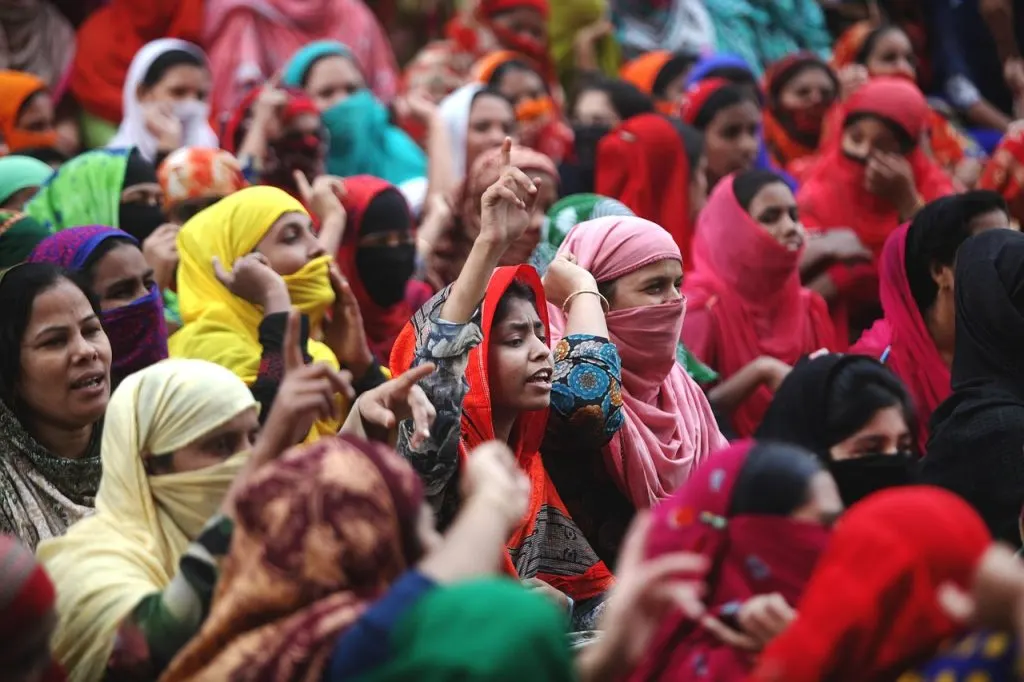
Demonstrations in Minneapolis against business closures are bringing the community together to defend the local economy and keep businesses open.
For example, Wrecktangle Pizza, located near the University of Minnesota, has decided to close its doors every Friday to join the protests. Owner Jeff Rogers commented that the ICE presence is « suffocating our restaurant community » and that it represents « something inhumane. » This position is shared by other establishments that have chosen to collaborate by temporarily closing their businesses to support the protests.
The phenomenon is not limited to visible displays; signs in storefronts proclaim: « Everyone is welcome here, except ICE. » For thousands of residents, this movement aims to create an environment of solidarity and security within the community. Business leaders say that the anxiety generated by the arrests has led many employees to stay home from work, resulting in lost revenue and a breakdown in social cohesion.
Impact of ICE on the Local Economy
70%
-20%
50%

https://www.youtube.com/watch?v=U5PG3SBWy0I Solidarity, a Response to Repression
The demonstrations planned for this Friday are not merely symbolic; they reveal a profound desire for solidarity among Minneapolis residents. The slogan « No work, no school, no shopping » refers to the impact ICE operations have on the daily lives of many. In this climate of widespread fear, the community is mobilizing to defend values of justice and humanity. A demonstration in Minneapolis against business closures is bringing the community together to express its concerns and demand solutions. Civil rights organizations, such as the ACLU, have pledged to support these actions and provide resources to victims of arrest. Meanwhile, food distribution campaigns are being organized by local churches like Dios Habla Hoy, which provides meals to families affected by ICE raids. Pastor Sergio Amezcua shared statistics revealing that his church has distributed nearly 100 tons of food each week, a response to a deepening humanitarian crisis. A large number of volunteers, often people not directly living under the threat of arrest, became involved in this solidarity effort. Groups were formed to welcome those who felt threatened and provide basic medical care. The community readily documented ICE’s actions to raise awareness of human rights violations, thus transforming this struggle into a matter of collective survival.
Social Media Mobilization
In an era where information travels at lightning speed, social media plays a crucial role in mobilizing protesters. Platforms like Twitter and Facebook have been used to organize demonstrations and alert residents to ongoing ICE operations. These digital tools allow for immediate action, which reinforces the sense of urgency and mobilizes many young people, who are often more likely to speak out against injustice.
This new way of operating fosters strong intergenerational connections, where young people often take the initiative while older generations offer their support and experience. These demonstrations are seen as a revolt against injustice, but also as a celebration of diversity, cultural richness, and solidarity within the community. Other cities, observing the situation in Minneapolis, are hoping to emulate these courageous acts of mutual aid and resistance.
Businesses Retreat in the Face of Arrest Threats
Faced with escalating threats, many businesses are opting for temporary closures during protests. This decision is motivated by a desire to protect their employees and customers. In some cases, this closure has become an act of protest in itself, illustrating unwavering support for members of the immigrant community.
Protest in Minneapolis against business closures, bringing the community together to defend local businesses and express their concerns.
The authorities’ reactions to these actions often demonstrate a disregard for citizens’ real concerns. A spokesperson for the Department of Homeland Security recently stated that these movements were an attempt to « shut down Minnesota’s economy » to protect criminals. This type of response only exacerbates the anger of residents who see ICE as a threat, rather than a protective entity.
Financial Support for Impacted Businesses
Read next
 Business
The presence of ICE threatens small businesses in Minneapolis and Minnesota; some owners say, « I can barely do my usual job. »
The Threat of ICE to Small Businesses in Minneapolis Since late 2022, the situation in Minneapolis has intensified with
 Business
Somali businesses face the challenges of ICE crackdown in Minneapolis
The Economic Context of Somali Businesses in Minneapolis In Minneapolis, Somali businesses are facing a difficult period
 Business
Will the Air Force close its ‘front door’ to small businesses?
In a context where collaboration between government and businesses, especially SMEs (small and medium-sized enterprises)
 Business
Trump denounces an ICE operation against immigration which he considers harmful to businesses
Impact of Trump’s Immigration Policy on American Businesses The immigration policy implemented by the Trump administrati